


Listen to the article
Emerging satellite-to-phone services are expanding from experimental phases to practical use, offering enhanced safety and resilience for travellers in remote areas, but remain supplementary to traditional terrestrial networks.
If you have ever been left with a frozen map or undelivered messages while travelling, a new wave of satellite-to-phone services promises to reduce those “no signal” moments. According to industry coverage, the technology is emerging from experimental stages into consumer products, but it is better understood as an addition to mobile service rather than an immediate substitute for roaming plans or eSIMs. (Sources: Thuraya, Skylo)
The market now contains two distinct approaches that are often conflated. One set of features is emergency-only communications , the short-message, SOS functions built into some smartphones for use in true coverage black spots. The other is full direct-to-cell satellite connectivity that aims to let ordinary phones exchange voice and data with orbiting systems when terrestrial towers are out of reach. (Sources: Skylo, Thuraya SatSleeve Hotspot)
Practical deployments today mostly follow a hybrid model that augments existing mobile networks rather than replaces them. SpaceX’s Starlink has developed a Direct-to-Cell concept to allow LTE phones to link with satellites, and carriers such as T‑Mobile are already offering services that use satellite links to preserve texting, location sharing and lightweight app traffic when conventional towers fail. Companies like Skylo have similarly focused on low-bandwidth SMS and sensor data services based on 3GPP standards. (Sources: Skylo, T‑Mobile)
Those live offerings carry technical limits travellers should expect. Satellite-to-phone links perform best with a clear view of the sky and are impaired by buildings, dense foliage or deep valleys. Latency and throughput remain inferior to 4G and 5G, and current direct-to-cell services are generally suitable for messaging and light app use rather than high‑bandwidth activities such as video streaming. (Sources: Skylo, T‑Mobile)
Where satellites make the biggest practical difference for travellers is resilience and safety rather than everyday performance. The new systems can provide messaging, basic internet access for coordination and emergency communications in places with no terrestrial coverage, turning absolute blackouts into intermittent, usable connectivity. For many outdoor enthusiasts and remote workers this fills a significant gap. (Sources: Thuraya SatSleeve Hotspot, T‑Mobile)
Speculation that SpaceX might build a smartphone designed to work natively with its constellation has attracted attention, but company statements and reporting have left that prospect unconfirmed. Even without a mass‑market “Starlink phone,” the broader trend of satellite-capable devices is prompting carriers and standards bodies to adapt, and hardware vendors are responding with a range of products that bridge satellite and cellular worlds. (Sources: T‑Mobile, Skylo)
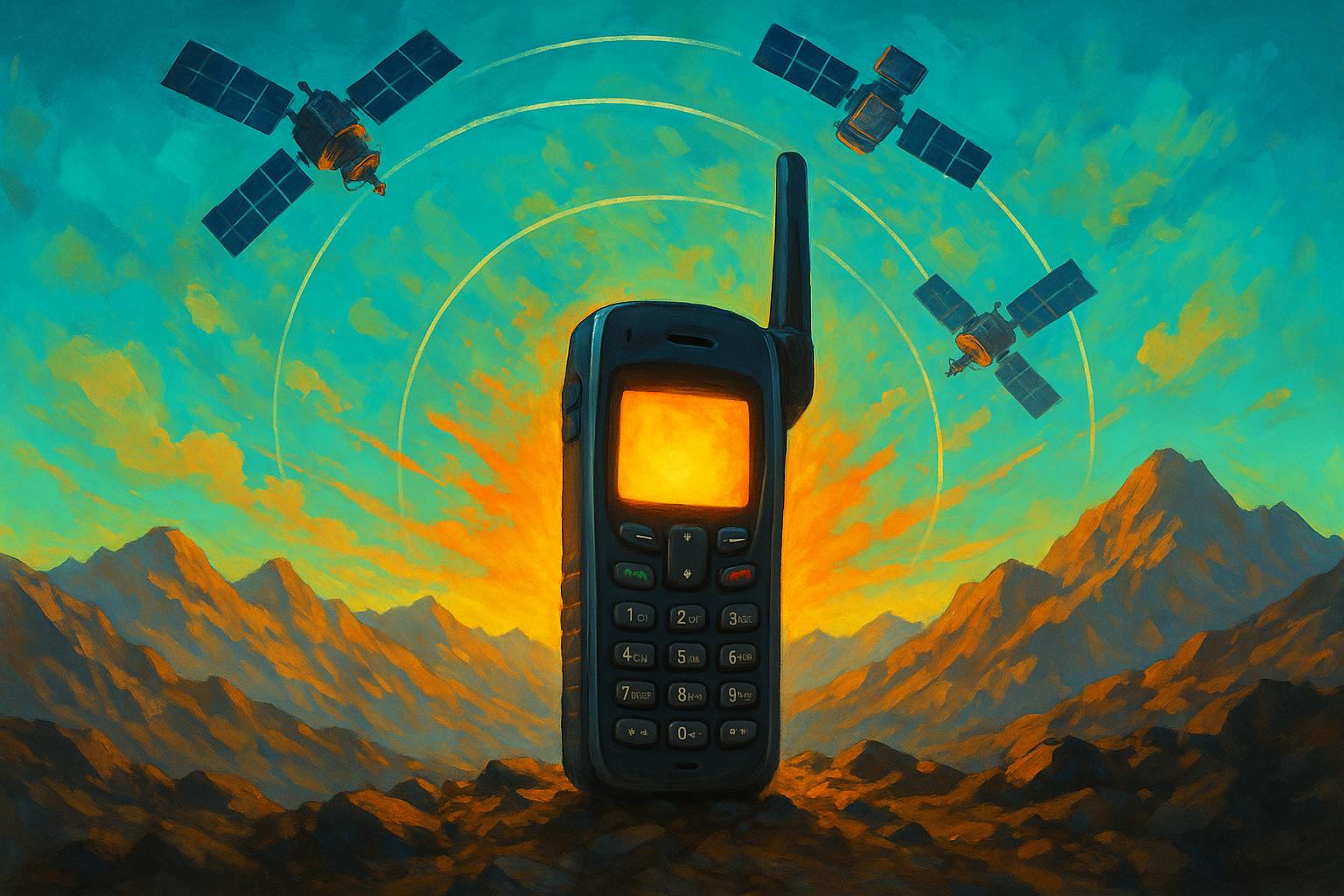
That product diversity includes both peripheral satellite adaptors and devices with integrated satellite radios. Vendors such as Thuraya offer SatSleeve accessories that convert consumer handsets into satellite-capable units, and the Thuraya Skyphone demonstrated at Mobile World Congress features a retractable antenna and dual support for satellite and terrestrial networks. Traditional rugged satellite handsets and personal satellite messengers remain on sale for travellers who need global reach and proven durability. (Sources: Thuraya SatSleeve Hotspot, Thuraya Skyphone, T‑Mobile)
For now, a pragmatic connectivity strategy remains the best option for travellers. Prioritise a reliable terrestrial data plan , a local SIM, roaming package or reputable eSIM provider , for daily use. Treat satellite features as a safety net and a supplement for remote stretches, and consider dedicated satellite-capable devices or carrier add-ons if your itinerary takes you far from cell towers. Industry offerings and regional support vary, so check device compatibility and service availability for the countries you will visit. (Sources: GigSky, Thuraya SatSleeve Hotspot, T‑Mobile)
Satellite-to-phone capabilities are transforming the edges of mobile coverage into usable territory, but they are currently a complement to, not a replacement for, conventional roaming and eSIM strategies. The emerging ecosystem , adaptors, hybrid carrier services and nascent satellite‑native devices , raises the likelihood that the next few years will substantially change how travellers stay connected, even if everyday high‑speed mobile data will remain rooted in terrestrial networks for the foreseeable future. (Sources: Skylo, Thuraya Skyphone, T‑Mobile)
Source Reference Map
Inspired by headline at: [1]
Sources by paragraph:
- Paragraph 1: [2], [6]
- Paragraph 2: [6], [2]
- Paragraph 3: [6], [4]
- Paragraph 4: [6], [4]
- Paragraph 5: [2], [4]
- Paragraph 6: [4], [6]
- Paragraph 7: [2], [5], [4]
- Paragraph 8: [7], [2], [4]
- Paragraph 9: [6], [5], [4]
Source: Fuse Wire Services