


Listen to the article
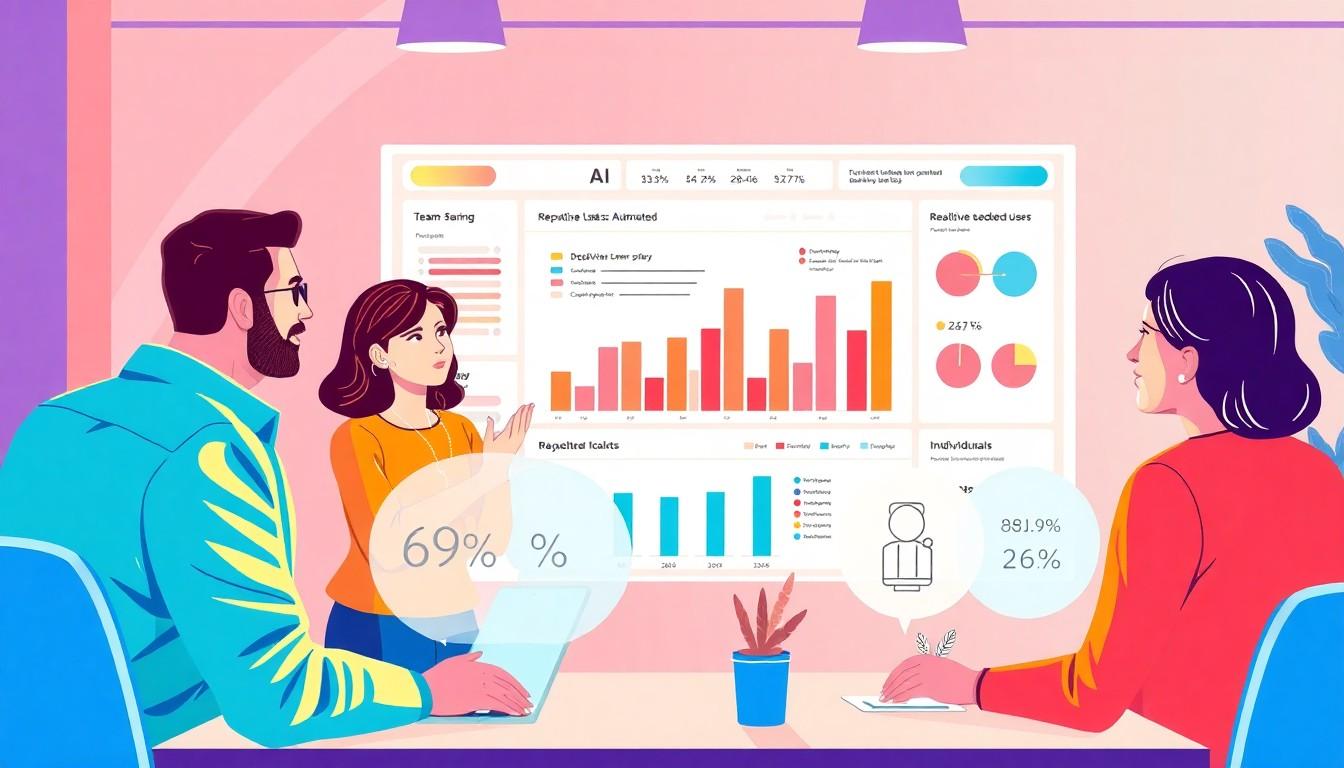
Uravation’s self-assessment found 68.9% of respondents who shared AI practices or led wider adoption had automated repetitive tasks, compared with 25.8% of individual users.
Uravation’s analysis of responses to its workplace AI diagnostic suggests that people who embed AI practices across a team are more likely to automate recurring tasks than those who use the technology on their own. Among respondents who shared methods with colleagues or led wider organisational adoption, 68.9 per cent had automated repetitive work. The proportion was 25.8 per cent among those using AI individually.
The company collected 963 completed assessments between 1 August and 2 November 2026. After repeat submissions were excluded using hashed IP addresses, the reported results covered 747 people. The six-question self-assessment asked about frequency and range of AI use, prompting, automation, checking outputs and sharing practices. Overall, 58.9 per cent said they used AI at work every day, while 63.7 per cent described their use as individual rather than shared with colleagues.
The findings also link greater delegation with more tailored checks. Of respondents who said they entrusted work to AI agents, 58.1 per cent reported varying the depth of their review according to the task. The corresponding share among those who had not automated recurring work was 23.7 per cent. Meanwhile, 40.9 per cent of people using AI throughout the day said they adjusted their checks to the intended use.
That pattern does not mean every output needs the same level of scrutiny. Guidance from the Canadian Centre for Cyber Security advises organisations to set clear limits on what AI agents can do, monitor their activity and require human approval for consequential decisions. It also recommends independent validation of important claims and retaining the ability to audit or reverse actions. The guidance underlines that delegation and oversight need to be designed together, particularly when mistakes could be costly or difficult to undo.
Uravation says the relationships in its data do not establish which behaviour comes first: teams may adopt automation because they share practices, or people who have already automated work may be more likely to spread their methods. The company also cautions that participants chose to use its online diagnostic and assessed themselves, so the results cannot be treated as representative of Japan’s workforce. The overall pattern was broadly similar to an earlier analysis of 403 respondents, although the company notes that the mix of people taking part changed over time.
The free diagnostic takes about two minutes and provides a score, an AI-use profile and suggested next steps. Uravation’s recommendations include sharing practices within a team, setting rules for how closely different outputs should be checked, and selecting a recurring task to test for automation. Its consulting service describes support for mapping work, deciding which tasks are suitable for AI, setting safeguards and helping new processes become part of everyday operations.
Source Reference Map
Inspired by headline at: [1]
Sources by paragraph:
Source: Fuse Wire Services