


Listen to the article
Traditional broadcast tower sites are being transformed into lucrative edge computing hubs, leveraging existing infrastructure to cater to growing demand for low-latency data processing and diversify revenue streams amid declining transmission volumes.
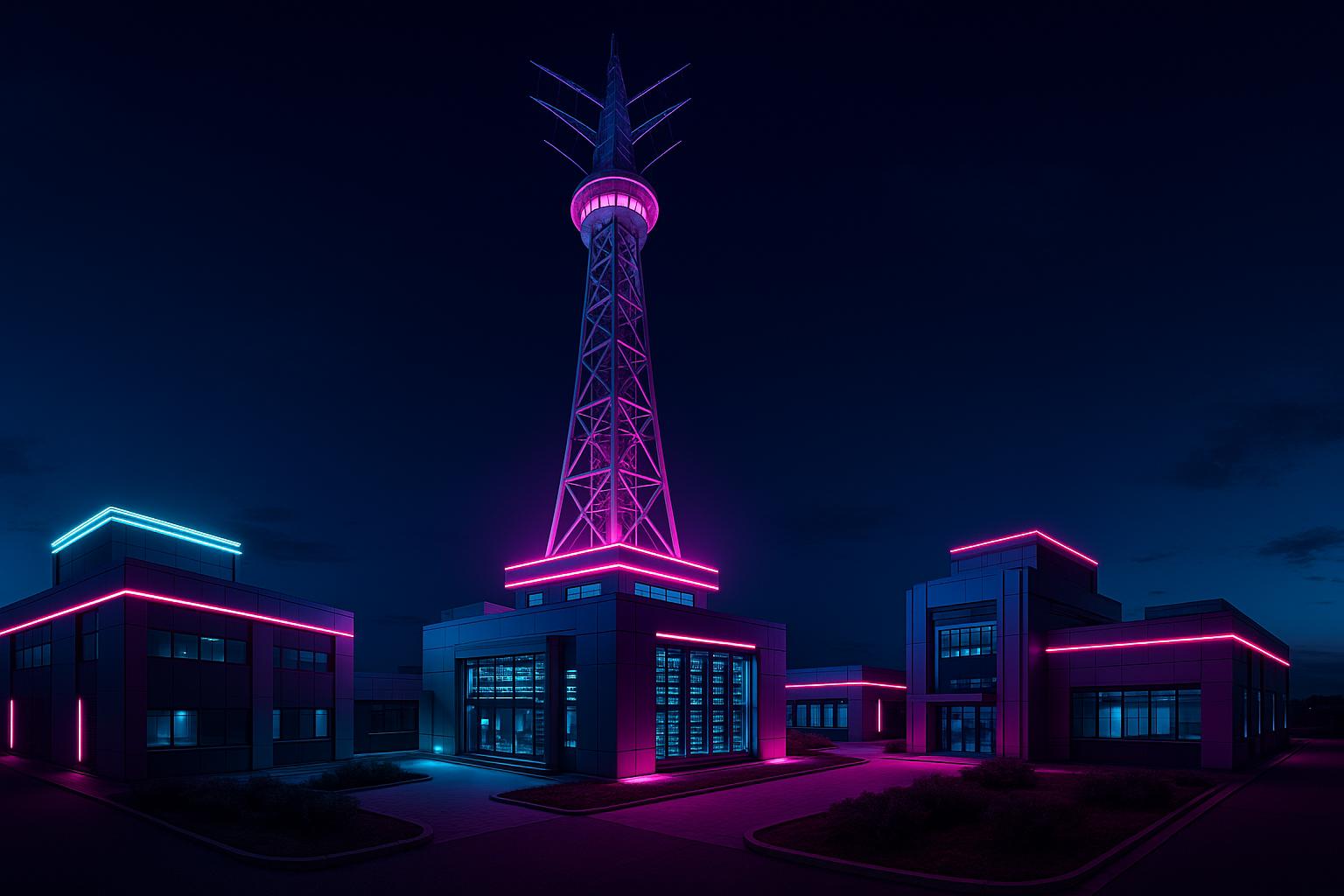
Broadcasters are increasingly repurposing the real estate and infrastructure that once existed solely to transmit radio and television into locations for edge computing, seeking fresh revenue streams while answering demand for low-latency, localised processing. Industry players say the combination of available floor area, robust grid connections and existing fibre links gives tower sites an operational edge over many traditional telecom locations. According to the report by Data Center Dynamics, broadcasters in several countries have begun converting space at transmission sites into colocation and edge facilities.
Finland’s Digita illustrates the logic behind the shift. The company, spun out from the national broadcaster Yle, already operates multiple large broadcast towers and has experimented with hosting third-party infrastructure inside its shelter buildings. “Equipment shelters and buildings on a broadcast site are significantly larger by area in comparison to telecom sites. Broadcast tower sites also have high-capacity grid connections, which telco sites lack,” Riku Helander, senior vice president of telecom at Digita, told Data Center Dynamics.
Digita has so far deployed a small number of edge data centres at its towers but believes the market opportunity will grow as broadcasters’ own power needs fall. The company says the transition from analogue to digital and the move to HD have reduced the electricity draw of transmission equipment, freeing capacity in backup power systems and on-site infrastructure that can be offered to other customers. This, the firm argues, makes broadcast sites attractive sites for low-latency hosting and interconnection services.
Other legacy broadcasters have taken a similar path. Rai in Italy has rolled out multiple edge and colocation sites using its Rai Way fibre ring to link facilities, while Czech, Lithuanian and Hong Kong operators have explored tower-based data centre offerings. In the Netherlands and elsewhere, tower operators have also begun to monetise land and fibre by deploying computing capacity adjacent to masts. According to reporting, these moves are designed to differentiate traditional transmission businesses and to capture revenue from cloud, content delivery and enterprise customers.
In the Baltics the state-owned Latvia State and Television Radio Centre (LVRTC) has transformed portions of its infrastructure into commercial data centre space. “When I first joined the company in 2014, one of the first main tasks was to write the business plan on how we can commercialize square meters in our towers and infrastructure units,” Janis Delvins, head of data center business direction at LVRTC, told Data Center Dynamics. LVRTC points to the Riga Radio and TV Tower as a major colocation hub in the region, claiming high availability and a concentration of internet traffic that underpins its sovereign-cloud ambitions for AI workloads.
Large tower companies have moved beyond pilot projects into broader strategies that combine real estate, fibre and compute. American Tower, for example, launched an edge initiative that placed facilities at several US tower sites and has expanded its data-centre footprint through acquisitions and new builds. “The fact that we have power, fiber, and land makes it easier to build a data center or extend the use of that land to a data center, so we think that’s a natural way for us to extend the capabilities that we already have on our tower sites,” Jake Rasweiler, senior vice president of innovation for American Tower’s US tower division, told Data Center Dynamics. Industry observers note that acquisitions such as CoreSite have allowed tower owners to offer converged communications and computing services as 5G and edge use cases mature.
Operators and tower owners point to several near-term workloads that suit distributed, tower-adjacent compute. Mobile operators are piloting Cloud RAN architectures that centralise base-station functions into cloud-like facilities, while content providers and streaming platforms seek edge points that reduce latency for video delivery. “As part of the tower growth, mobile network operators (MNOs) are also piloting Cloud RAN solutions, which is also a potential growth area for Digita as well,” Helander told Data Center Dynamics, noting that low-latency streaming and interconnection services are key drivers. The technology is still early in commercial deployment, but suppliers and towercos see it as a catalyst for further rollouts.
The trend extends to markets where large telcos own significant mast portfolios. Reports indicate BT Group has at least 200 radio masts and is weighing ways to leverage them for edge computing, while infrastructure managers such as Vertical Bridge in the US continue to promote broadcast-capable portfolios to broadcasters and enterprises. Industry analysis suggests the combination of owned land, power and fibre presents a pragmatic path for broadcasters and tower owners to diversify revenues as traditional transmission volumes stabilise or decline.
Source Reference Map
Inspired by headline at: [1]
Sources by paragraph:
Source: Noah Wire Services