


Listen to the article
At Stellantis’s Goiana factory in Brazil, engineers are using integrated production data and clearer visualisations to check AI alerts for welding faults. The project reports 14 failures averted in six months, but wider adoption will depend on warnings that staff can verify and act on.
At Stellantis’s Goiana factory in Pernambuco, Brazil, an artificial-intelligence system is being used to spot unusual behaviour in welding equipment before it leads to a breakdown. The project’s reported results include 14 equipment failures averted over six months, 15 hours of production time recovered in one month and the potential to make 810 additional vehicles a year. These are reported outcomes rather than independently audited figures.
The system’s effectiveness depends not only on recognising anomalies but also on whether maintenance staff can judge the alerts for themselves. In a session at the Industrial AI Summit 2026, Aron Semle of HighByte and Denis Leite of Mekatronik described how the Goiana team prepared factory data for analysis and gave engineers ways to scrutinise the model’s warnings. IIoT World’s coverage of the event identifies the discussion as part of a programme focused on industrial AI in working environments.
The project draws on information from different sources, including text files, databases and operational systems. Instead of treating each stream in isolation, the team connected the information to specific welding operations, making it possible to compare activity across the production process. A separate IIoT World account of Stellantis’s industrial data architecture says the plant’s wider system was designed to support more than 30 AI applications, with data integration reportedly reduced from months to weeks. That wider architecture provides context for the welding project, rather than describing the anomaly-detection system alone.
Stellantis also planned for routine factory use rather than limiting the work to a demonstration. Its engineers participated throughout, bringing operational knowledge to the development and deployment process. Reporting by Vrum says the broader digitisation effort began as a body-shop pilot involving Stellantis, the University of Pernambuco, HighByte and Siemens, with SENAI-PE joining as the work expanded. The account describes an architecture that brings together information from machinery, robots and industrial systems, without requiring major new equipment investment.
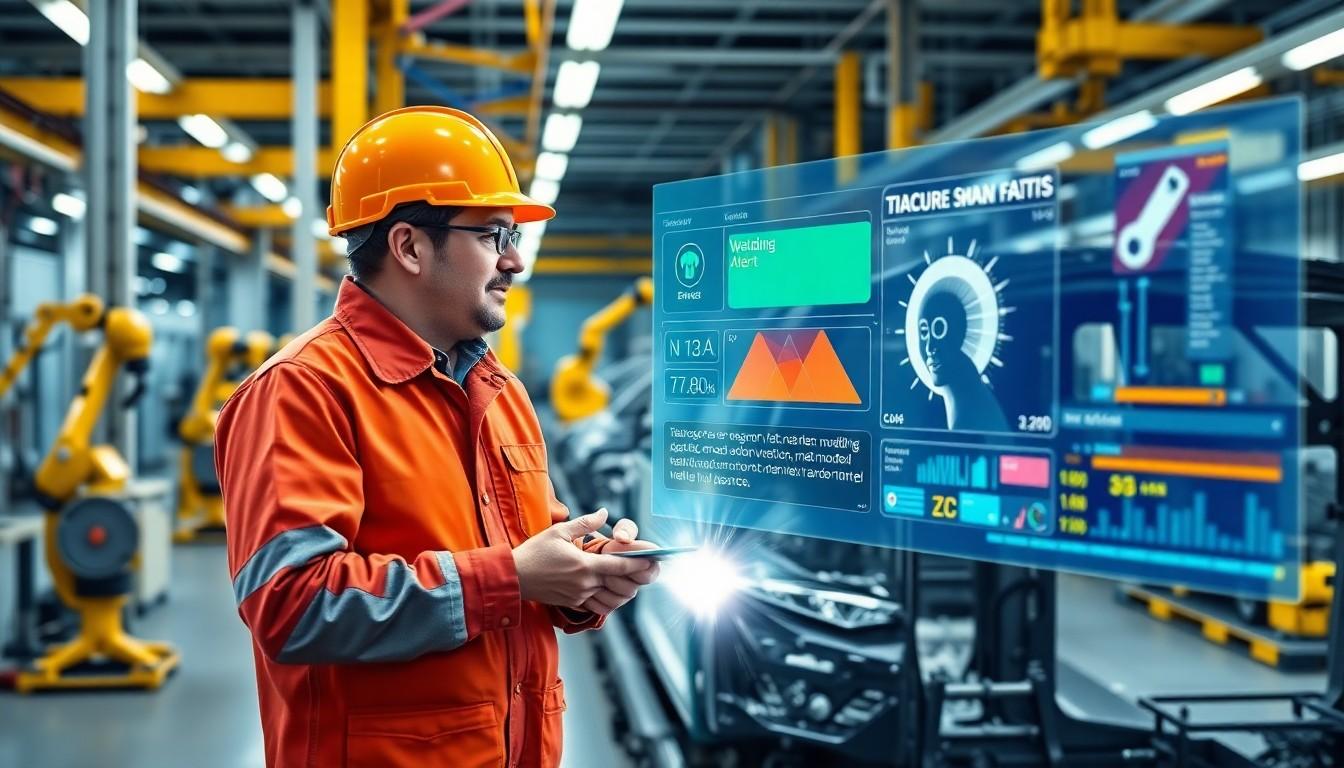
To assess alerts, engineers used dashboards, time-series records and distribution charts to compare typical welding behaviour with the cases identified by the model. The first visualisations did not make the differences sufficiently clear, so the team revised them to show more plainly what had changed. IIoT World’s account says that as technicians investigated alerts and confirmed genuine problems, their confidence increased, allowing the system to become part of maintenance work in a plant operating around the clock.
Reports from Vrum and ClubAlfa also describe the project’s broader ambitions: extending the approach beyond the initial welding application and applying the data architecture in other areas of Goiana, with potential for use at other sites. The Industrial AI Summit, held online over two days in September 2026, provided the setting for Semle and Leite to discuss the work. While the reported production gains offer an early measure of its promise, wider deployment will depend on whether the system continues to deliver useful warnings that factory teams can verify and act upon.
Source Reference Map
Inspired by headline at: [1]
Sources by paragraph:
Source: Fuse Wire Services