


Listen to the article
The partners will train robots to inspect sites and assist with demanding or hazardous tasks, with MITNETZ STROM set to host initial operational trials.
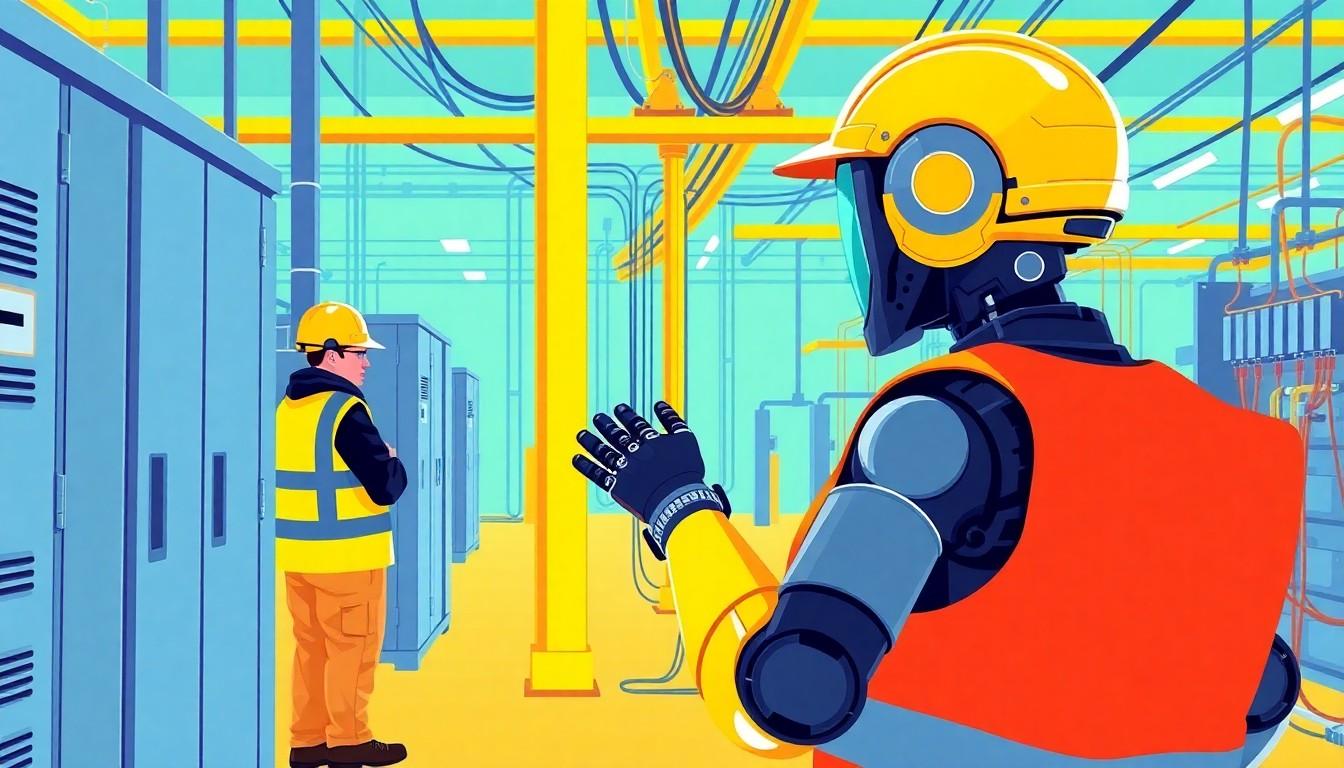
E.ON, enviaM and Neura Robotics are preparing to test robotic systems for electricity-network work, with initial trials expected in 2027. The companies plan to develop applications for inspecting and monitoring infrastructure, including substations, and helping staff with tasks that are repetitive, physically demanding or carry particular safety risks. MITNETZ STROM, the enviaM Group’s electricity-network subsidiary, will act as the pilot partner.
The programme is at an early stage: the partners intend first to select suitable tasks and build the capabilities needed to carry them out, before testing them in operational settings. In its announcement, enviaM also lists site security among possible uses. The stated ambition is to establish methods that can be adapted and reused across energy infrastructure, rather than produce a one-off technology demonstration.
Robots will be trained at TUM RoboGym powered by NEURA, a 2,300-square-metre centre at Munich Airport’s LabCampus. The Technical University of Munich describes the facility, jointly operated with NEURA Robotics, as a practical training and research environment for humanoid and other robots. It is designed to let people teach systems physical tasks directly, addressing a shortage of data for complex actions and the limits of simulations in reproducing real-world conditions.
For the energy project, specialists are expected to demonstrate work procedures using motion capture, sensor-equipped clothing and teleoperation. Robots can then practise the tasks and generate further data before selected capabilities move into field trials. According to the partners’ account, the training will combine human demonstrations with robot data and simulation, while the Neuraverse platform is intended to connect development at the centre with later applications.
NEURA’s Neuron AI model is described by the company as combining visual, tactile and audio inputs with language and information about a robot’s own state. The company says this broader set of inputs is intended to help robots interpret and act in physical environments. Its 4NE1 humanoid is one possible platform for the work: NEURA presents the robot as designed for industrial settings, but no grid-inspection deployment has yet been established. The partnership’s proposed use of humanoids in existing facilities remains subject to training and operational testing.
The rationale for exploring a human-shaped robot is that energy sites are already laid out for workers, with features such as stairs, doors and control cabinets. A system able to move through those spaces could potentially assist without requiring extensive alterations to facilities. The companies have not, however, said that robots will replace staff; their stated focus is targeted support for workers, with practical experience at MITNETZ STROM expected during 2027.
Source Reference Map
Inspired by headline at: [1]
Sources by paragraph:
Source: Fuse Wire Services