


Listen to the article
As environmental issues shift from episodic emergencies to sustained crises, autonomous technologies are transforming monitoring and cleanup efforts, offering new hope for mitigating health and ecological impacts on a global scale.
Environmental crises once treated as episodic emergencies now demand sustained, wide-ranging responses. According to the World Health Organization, air pollution is linked to millions of premature deaths annually and nearly the entire global population breathes air that exceeds recommended limits, underscoring the scale and human cost of environmental degradation. Industry estimates of plastic flowing into marine systems and the multi-trillion-dollar economic burden of ecosystem decline add urgency to the problem.
That urgency is reshaping the tools used to protect ecosystems. Where monitoring and remediation were once intermittent and labour-intensive, autonomous machines are beginning to provide persistent coverage and greater reach. The move toward continuous sensing and intervention responds directly to the WHO’s warnings about the chronic health impacts of environmental hazards by enabling earlier detection and faster action.
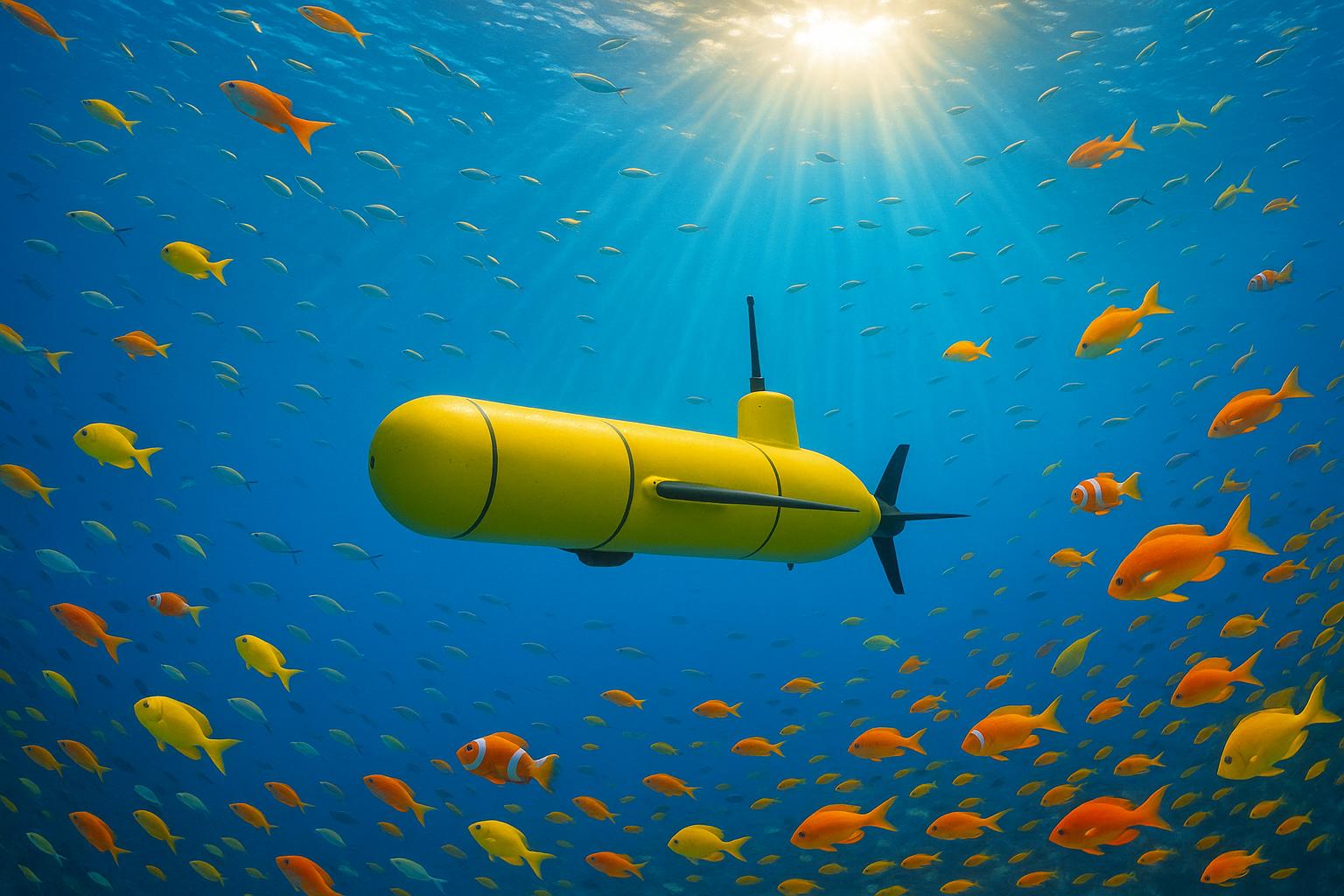
What is emerging resembles infrastructural change rather than a collection of gadgets. Distributed fleets of aerial, surface and subsea robots are generating near-continuous streams of environmental data, turning previously sparse snapshots into ongoing situational awareness. Commercial operations such as long-endurance surface vessels now map ocean conditions over weeks and months, supplying the granular intelligence needed for targeted responses at sea.
Aerial systems have been pivotal in increasing monitoring cadence. Drones equipped with sensors can map urban air quality, locate methane emissions from oil and gas sites and support early wildfire detection, transforming inspections that were once monthly into daily or real-time activities. That intensified observation is directly relevant to the public-health harms the WHO describes, because high-frequency data permits interventions before exposures become widespread.
Maritime robotics are closing the gap between measurement and removal. Large-scale projects that combine data-driven modelling with active collection are seeking to extract plastic from oceanic gyres and rivers, while smaller autonomous craft operate in harbours and canals to trap debris before it disperses. The same technological advances that allow persistent ocean mapping are enabling these cleanup operations to be planned and executed with far greater precision.
Robotics also changes waste management and hazardous-site response. Automated sorters using computer vision and machine learning increase recycling yields and turn waste flows into predictable supply chains, while inspection and intervention robots are deployed in environments that are unsafe for people. These applications reduce occupational risk and extend operational possibilities in contaminated or radiologically hazardous locations.
The economics of continuous monitoring favour prevention over large reactive expenditures. Early detection can reduce the scale and cost of cleanups and limit health impacts that strain care systems, a concern highlighted by global public-health analyses. Yet technical limits, energy supply, harsh operating environments, fragmented markets, and regulatory hurdles such as rules for beyond-visual-line-of-sight drone flights remain material constraints to faster uptake.
Realising the potential of environmental robotics will require integrating data streams, improving endurance, and aligning commercial incentives with public-health and conservation goals. According to the World Health Organization, mitigating environmental risks yields substantial health and economic benefits; autonomous sensing and intervention systems, if scaled responsibly, could be a central part of that effort.
Source Reference Map
Inspired by headline at: [1]
Sources by paragraph:
- Paragraph 1: [2], [3]
- Paragraph 2: [2]
- Paragraph 3: [2]
- Paragraph 4: [2]
- Paragraph 5: [2]
- Paragraph 6: [2]
- Paragraph 7: [3]
Source: Fuse Wire Services