


Listen to the article
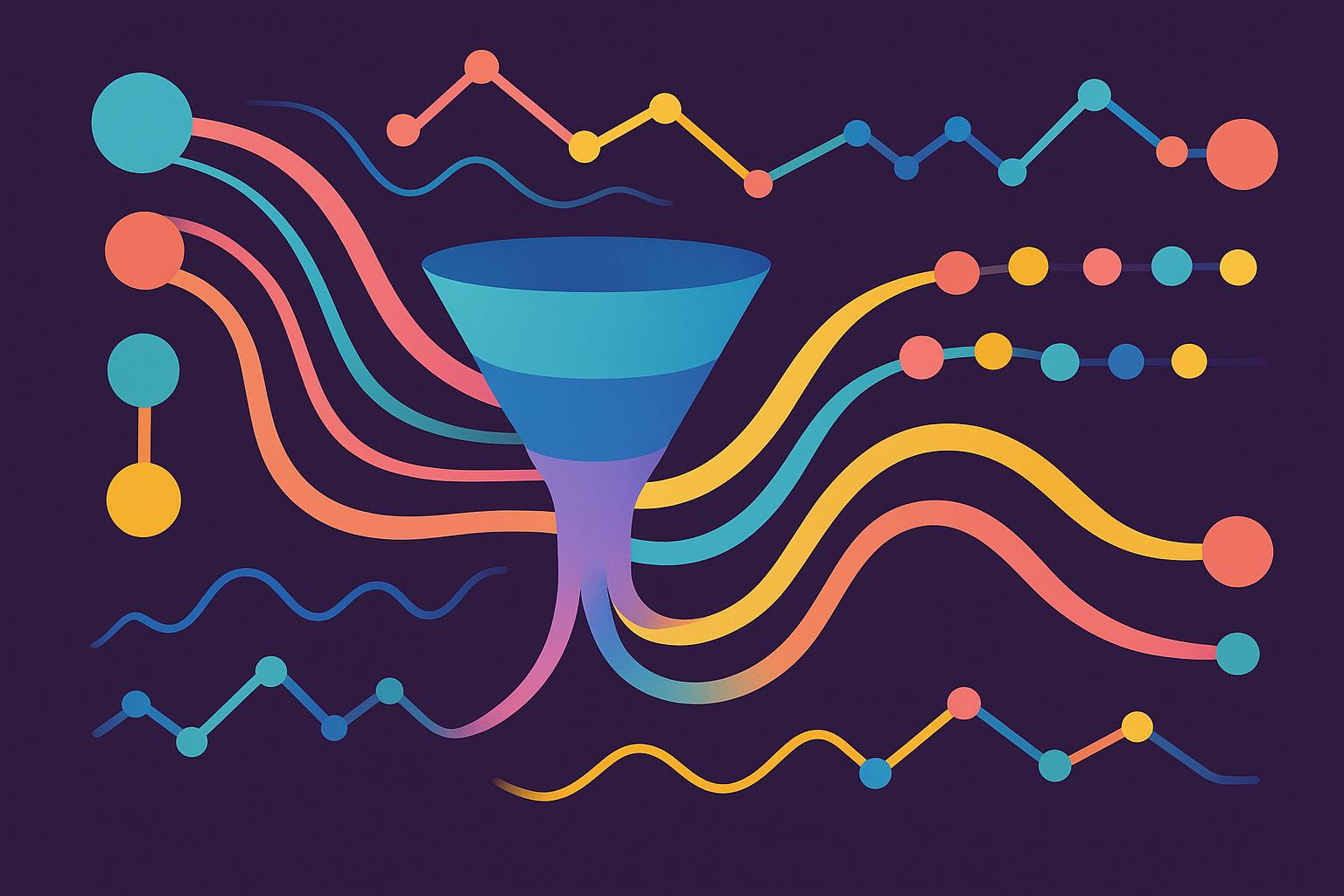
Emerging AI-driven systems and no-code tools are revolutionising marketing funnels by enabling real-time personalisation, predictive analytics, and full-funnel orchestration, creating a new standard of efficiency, agility, and bespoke customer experiences.
AI automation is fundamentally transforming the landscape of funnel optimization, ushering in a new era defined by real-time personalisation and intelligent decision-making at every stage of the customer journey. Traditional funnel strategies, once reliant on static segmentation and manual processes, are being eclipsed by dynamic systems capable of analysing vast data points and adapting instantaneously to user behaviour and intent signals.
The evolution from linear, assumption-based funnels to responsive, AI-driven pathways marks a decisive shift. Unlike old models, which operated on demographic averages and fixed customer journeys, modern AI systems create bespoke experiences that react in real time to micro-signals and behavioural nuances that human marketers could never manage effectively. This leap is more than mere automation, it constitutes funnel evolution, where messaging, timing, and channel selection are continuously optimised through predictive analytics and machine learning.
This revolution is empowered significantly by no-code platforms such as Make.com, which democratise access to complex automation. Agencies no longer need extensive technical expertise or developer resources to integrate their marketing ecosystems. These platforms enable the construction of sophisticated workflows visually, connecting disparate marketing tools from CRM systems to advertising platforms and analytics dashboards. For instance, an agency can automatically monitor and optimise Google Ads performance, reallocating budgets while triggering highly personalised follow-up email sequences, entirely without manual intervention.
One of the standout applications of AI automation is in automated campaign brief generation. AI-powered systems can synthesize real-time market intelligence, competitor analysis, and client data into dynamic, consistent briefs that inform creative teams with up-to-date recommendations and resource planning, elevating both scale and quality of campaign planning.
Lead scoring has also been revolutionised. Traditional models based on demographics and simple triggers have given way to advanced predictive systems that evaluate hundreds of variables, updating lead scores in real time by analysing behaviour across websites, email engagement, social media, and external data. This granular approach not only enhances qualification but also boosts conversion rates by 30-50% as nurturing is tailored precisely to buyer intent.
Customer Relationship Management (CRM) automation now goes far beyond static email sequences. AI-powered CRM triggers monitor multiple touchpoints and tailor multi-channel journeys dynamically, adjusting actions based on behavioural patterns and preferences. For example, prospects displaying high engagement patterns are automatically prioritized for timely sales follow-up, significantly enhancing conversion probability. Furthermore, CRM triggers can predict lifecycle events such as renewals or churn risks, activating retention or upselling campaigns proactively.
Arguably the most transformative facet of AI funnel automation is the orchestration of full-funnel campaigns across myriad channels, from social media awareness and retargeting to email nurturing and sales outreach, executed with minimal manual oversight. Continuous performance data analysis feeds automated adjustments in budget, messaging, and timing, ensuring optimal efficiency and effectiveness. This holistic approach to campaign execution balances cross-channel performance with adaptive learning, fundamentally redefining campaign management.
The frontier of AI automation lies with AI agents, autonomous software that learns and adapts without pre-defined rules, making complex decisions in real time. These agents personalise website experiences, email content, and ad creative dynamically or continuously monitor competitors to adjust strategy on the fly. The rise of no-code AI agent platforms enables agencies to deploy these sophisticated systems tailored to their unique needs without deep technical burdens.
Central to the success of AI automation is comprehensive data integration. Agencies must break down data silos and unify first-party CRM data with third-party sources, social media, and market intelligence tools. This unified data ecosystem is critical for accurate AI-driven insights and decision-making, with performance improvements of 200-300% observed compared to fragmented data approaches.
Real-time personalisation enabled by AI advances beyond broad segmentation, creating uniquely tailored experiences for individual prospects. By analysing hundreds of behavioural variables simultaneously, AI systems determine the most relevant content, timing, and channel on a case-by-case basis, generating thousands of unique campaign variations that would be impossible to manage manually.
Predictive analytics further enhances automation by forecasting customer needs and market fluctuations, allowing agencies to anticipate demand, identify churn risks, and optimise strategies before issues arise. This proactive stance marks a major step beyond reactive marketing practices.
Successful implementation of AI automation involves strategic scaling, starting with manageable projects such as lead scoring and email sequencing before advancing to complex predictive optimisation and AI agent deployment. Developing data infrastructure, staff training, and performance measurement capabilities are crucial to achieving sustained automation benefits.
Early adopters reap significant competitive advantages owing to continuous learning systems, richer behavioural data, and superior personalisation, all of which compound over time. As client expectations evolve, agencies relying on manual processes risk falling irreversibly behind.
Looking ahead, the future points toward increasingly autonomous marketing systems where AI handles routine optimisation and execution, liberating human marketers to focus on strategy and creativity. Those that integrate human insight with AI efficiency will set the benchmark for customer acquisition and retention in an era where automation reshapes not only funnel optimisation but the very definition of marketing success.
📌 Reference Map:
- [1][2] (Growth Rocket) – Paragraphs 1-16
- [3] (Pideya Learning Academy) – Paragraph 6
- [4][5] (arXiv research on AI personalisation agents) – Paragraphs 1, 9
- [6] (arXiv rIoT paper on automation frameworks) – Paragraph 3
- [7] (Cognify AdaSeek research) – Paragraph 11
Source: Fuse Wire Services