


Listen to the article
The UK’s data centre sector is experiencing unprecedented growth, with nearly £45 billion committed to over 100 projects amid rising AI demands and urban expansion, prompting architectural innovation and challenges.
The UK is experiencing a significant surge in data centre development, driven by increasing demand for artificial intelligence (AI) processing capacity and wider digital infrastructure needs. Since mid-2024, private investment in the sector has soared, with around £45 billion committed to new projects. Almost 100 data centres are planned across the country over the next five years, signalling a pronounced expansion beyond traditional locations like London and the M4 corridor.
This boom has been catalysed by major technology companies and investment firms. US-based Equinix recently pledged £4 billion to double its processing capacity in the UK, prompting Technology Secretary Liz Kendall to hail it as a “huge vote of confidence” in the industry. Similarly, firms such as CyrusOne, ServiceNow, Cloud HQ, and CoreWeave have collectively announced more than £6 billion in UK data centre investments, reflecting the commitment of American tech giants to the British market. Government initiatives, including the creation of “AI Growth Zones,” aim to streamline planning processes, providing a single point of contact for developers to expedite project delivery amid increasing demand for AI-related services.
Among large-scale developments, the most notable is Blackstone’s confirmed £10 billion investment in a hyperscale AI data centre in Blyth, Northumberland. Announced by Prime Minister Keir Starmer, the project aims to breathe new economic life into a derelict site originally earmarked for electric vehicle battery production. Construction is slated to start in 2025, with the facility expected to create approximately 4,000 jobs. Blackstone is also contributing £110 million toward local skills training and infrastructure, underlining a broader commitment to regional development and the UK’s AI ambitions.
This rapid infrastructure growth presents complex challenges and opportunities from an architectural perspective. Traditionally, data centres have been utilitarian, nondescript buildings placed away from residential or urban areas. However, as these facilities move closer to town centres and neighbourhoods due to demand and the need to reduce latency, architectural approaches are evolving. Designers must now marry demanding technical specifications, such as precise spatial requirements for racks, cooling systems, and power infrastructure, with aesthetic and community considerations.
Chetwoods Architects director Louis Fantis highlights the tension between maintaining internal operational integrity and responding to external planning and sustainability demands. The sheer technical rigidity of data centre design means that even small alterations to internal space can jeopardise entire projects, unlike in residential or commercial building sectors where flexibility is higher. Meanwhile, visual impact, landscape integration, and façade treatments are garnering more attention to ensure data centres do not become visual blights in sensitive or historic settings.
The rise of “edge computing” adds another layer to this dynamic, with smaller, decentralised facilities strategically positioned close to users such as hospitals and public transport networks. These centres enhance system resilience by providing local processing power and backup capabilities but present design and security challenges due to their urban locations and sensitive functions.
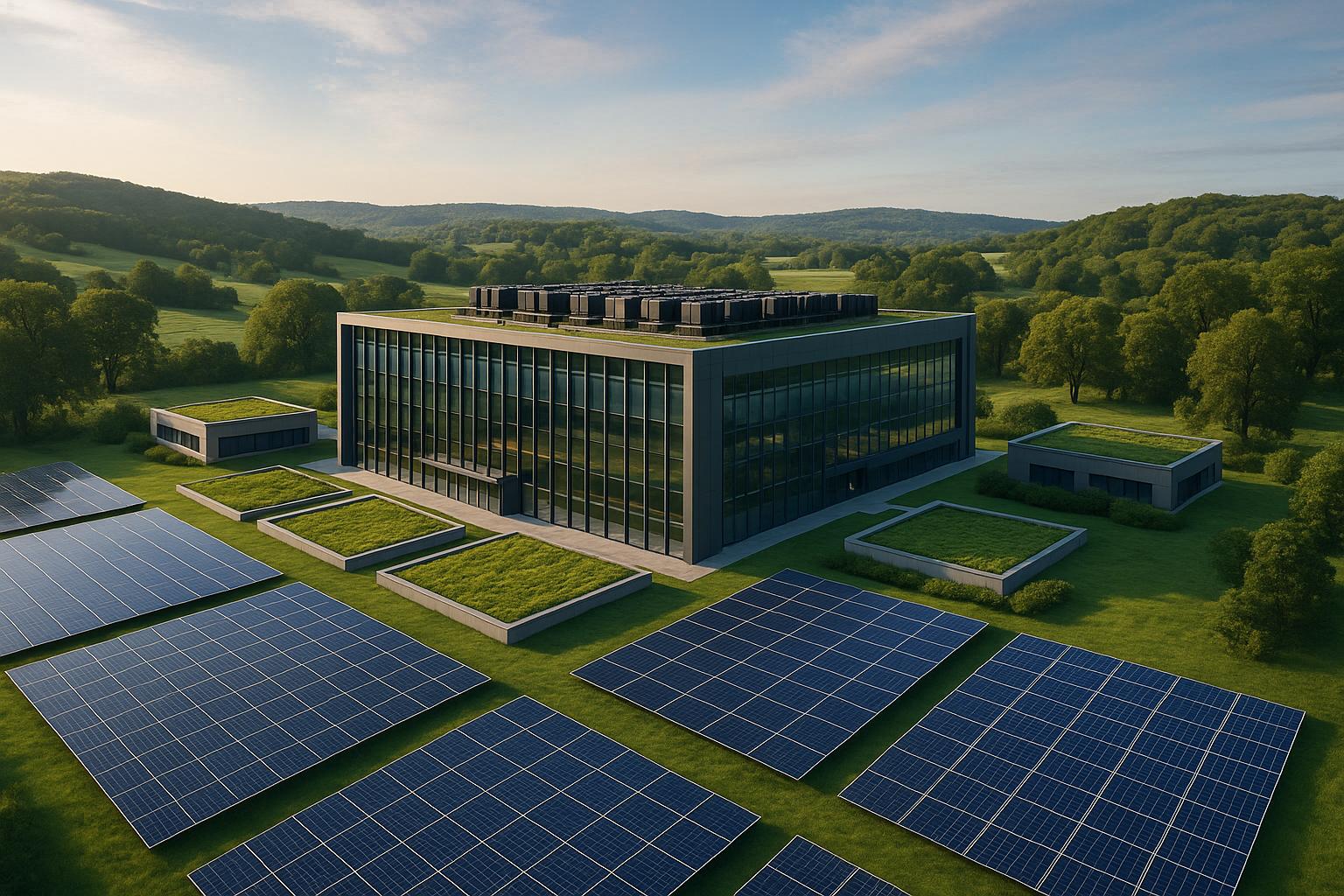
Architectural innovation is also being sought in data centres’ sustainability and performance. Some designs incorporate renewable energy technologies extensively, using solar panels, wind turbines, or novel water-cooling systems to reduce energy consumption. There is growing interest in the creation of “micro-circular economies,” where excess heat from data centres is repurposed to warm adjacent buildings like leisure centres or businesses. For example, a data centre the size of a washing machine has been used to heat a swimming pool in Exmouth, cutting energy costs significantly.
Despite design improvements and technological advances, planning hurdles remain significant. Microsoft recently described the UK’s planning regime as “painful,” citing delays in securing permission for a new Leeds data centre that could push completion back by several years. The government is responding to these challenges with AI Growth Zones intended to cluster similar developments, ease access to power supplies, and streamline approval processes.
On the commercial property front, companies like Segro are adapting their business models to meet shifting market demands by transitioning from leasing “powered shell” buildings to fully equipped data centres tailored to major cloud providers. This shift promises greater rental income but comes with new operational risks.
Meanwhile, other investments continue to shape the UK’s data centre landscape. Colt Data Centre Services recently secured approval to expand its Hayes Digital Park in West London with a £2.5 billion investment, adding hyperscale facilities and an innovation hub powered by renewable energy. In Essex, a £1.3 billion data centre project in Wickford reflects ongoing regional expansion, supported by government efforts to position the area as a hub for AI infrastructure.
The data centre boom underscores their growing importance as critical infrastructure underpinning modern life and economic competitiveness. Architects, policymakers, and industry stakeholders alike must engage in forward-looking strategies to balance technological imperatives, environmental sustainability, community integration, and efficient delivery. For architects, it represents both a challenge to reimagine a historically utilitarian typology and an opportunity to shape the physical and social context of a digital future.
📌 Reference Map:
- [1] (Architects’ Journal) – Paragraphs 1, 5, 6, 7, 8, 9, 10, 11, 12, 13, 14, 15, 16
- [2] (Reuters) – Paragraphs 1, 2, 3
- [3] (Reuters) – Paragraph 3
- [4] (UK Government) – Paragraph 2, 3
- [5] (IT Pro) – Paragraph 12
- [6] (IT Pro) – Paragraph 13
- [7] (Reuters) – Paragraph 14
Source: Fuse Wire Services