


Listen to the article
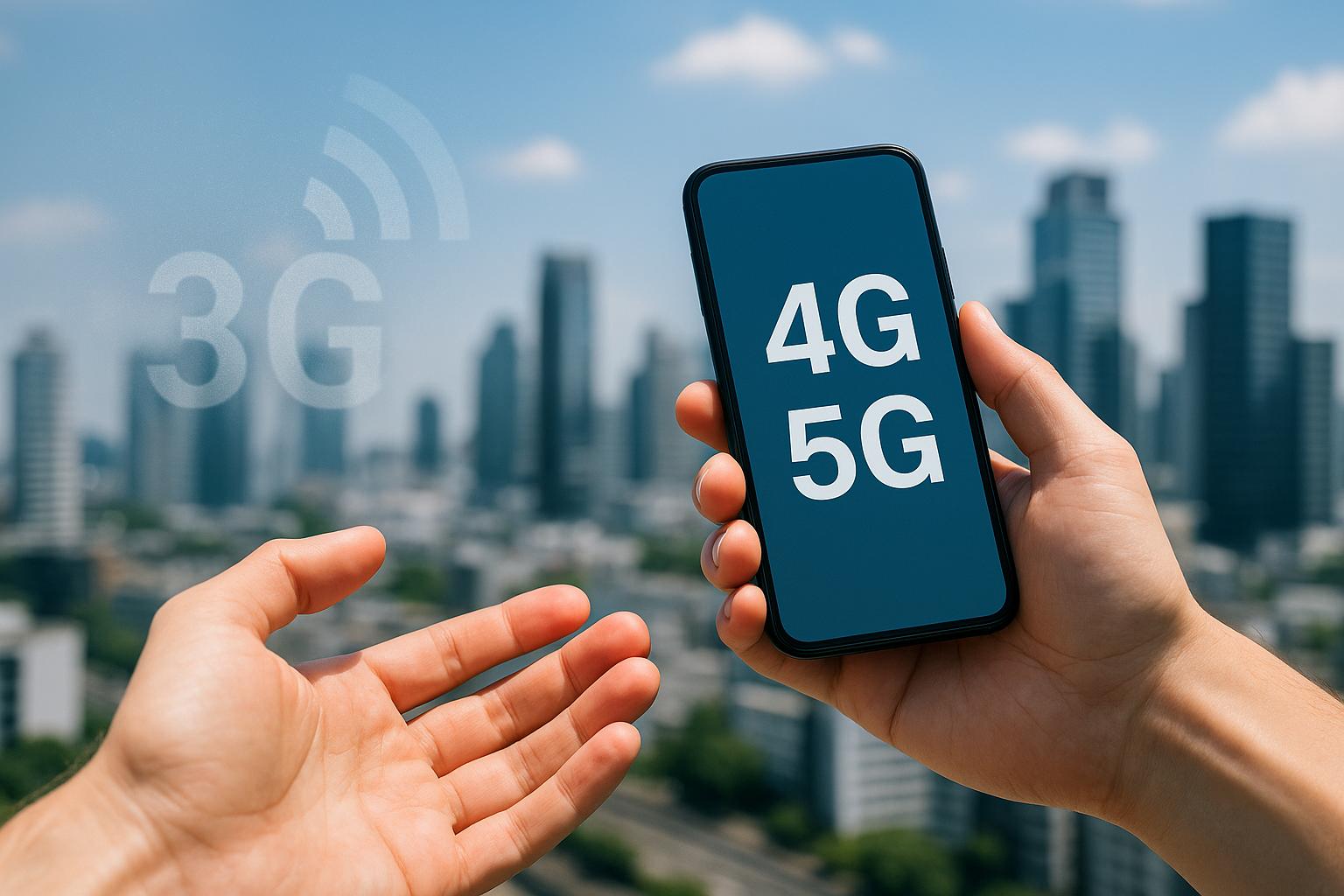
Virgin Media O2 is phasing out its 3G network across the UK to prioritise 4G and 5G services, prompting millions to upgrade their devices. The move enhances mobile speeds and capacity but requires customers with older handsets or international SIMs to adapt before services are discontinued.
One of the UK’s largest mobile operators, Virgin Media O2, is completing the nationwide switch-off of its 3G mobile network this year, a move that will leave customers using 3G-only handsets unable to access mobile data while still permitting voice calls and SMS over remaining networks. According to GB News, O2 has already turned off 3G across large areas and says the last stretches will follow soon, with occasional brief 3G signals possible in early 2026 but not indicative of ongoing service. [1]
The operator and industry regulators say the change is intended to free up radio spectrum for 4G and 5G services so more capacity can be directed to faster mobile broadband and improved voice quality. Sky News reports the shutdown is taking place in stages through 2025, beginning with Durham on 2 April 2025, and extending to towns such as Norwich, Telford, Guildford and Torquay as part of the rollout. Industry commentary notes that 3G usage has fallen to a small fraction of total data traffic, prompting the 2021 agreement between government and networks to retire the technology. [2][1]
O2 has run trial programmes in places including Norwich, Telford, Guildford, Torquay, Norwich and Watford to test the transition, and has been contacting customers who still use older handsets to outline upgrade options. According to ISPreview, O2 scheduled switch-off dates for Norwich, Telford and Guildford on 16 July 2025 and for Torquay on 4 August 2025, and warned that customers with incompatible devices will need to move to 4G- or 5G-capable phones to retain mobile data services. The company says only a small portion of customers will be affected and recommends visiting O2 stores or My O2 online to check upgrade choices. [4][6][1]
Regulatory guidance from Ofcom underlines the broader timetable for legacy network retirements and the protections for consumers. Ofcom notes that mobile operators have agreed a phased approach to withdraw 2G and 3G services by 2033 to support 4G and 5G rollouts, and that operators including O2 will begin moving traffic away from 2G from 2025. Customers with 4G or 5G devices are not expected to be affected, but those with older handsets should upgrade to maintain data and other services. [3][5]
Beyond UK-only service changes, O2 will also withdraw inbound 2G and 3G roaming on 1 October 2025, a step highlighted by ISPreview that will affect international visitors and certain machine-to-machine SIMs that rely on legacy roaming. Users reliant on older SIMs or devices for international roaming should make alternative arrangements before that date. [7]
Virgin Media O2’s Chief Technology Officer Jeanie York described 3G as “a relic of a bygone era” and highlighted benefits from reallocating spectrum to newer networks, such as more reliable streaming and better overall connectivity. Network operators point to the gulf in speeds as part of the rationale , 3G peak speeds of roughly 6Mbps compared with typical 5G throughput measured in tens or hundreds of Mbps , and say reclaiming spectrum will allow improvements in 4G and 5G performance for the majority of customers who have already upgraded. [1]
📌 Reference Map:
- [1] (GB News) – Paragraph 1, Paragraph 2, Paragraph 3, Paragraph 6
- [2] (Sky News) – Paragraph 2
- [3] (Ofcom) – Paragraph 4
- [4] (ISPreview) – Paragraph 3
- [5] (Ofcom) – Paragraph 4
- [6] (ISPreview) – Paragraph 3
- [7] (ISPreview) – Paragraph 5
Source: Fuse Wire Services