


Listen to the article
Ireland has reduced energy-related emissions by 16% since 2018, primarily through renewables and power sector reforms, but faces significant challenges in sectors like transport and data centres that threaten its 2030 climate commitments.
A new report from the Sustainable Energy Authority of Ireland (SEAI) shows Ireland has cut energy-related emissions by 16% since 2018 and reduced total energy-related emissions to their lowest level in over 30 years, but warns that the country has not yet broken the link between economic growth and fossil fuel use in a meaningful way. According to the SEAI, the present pace of change , an average emissions fall of 2.7% per year , is well short of the roughly 5% annual reduction required for Ireland to meet its legally binding commitment to cut greenhouse gas emissions by 50% by 2030. [1][2]
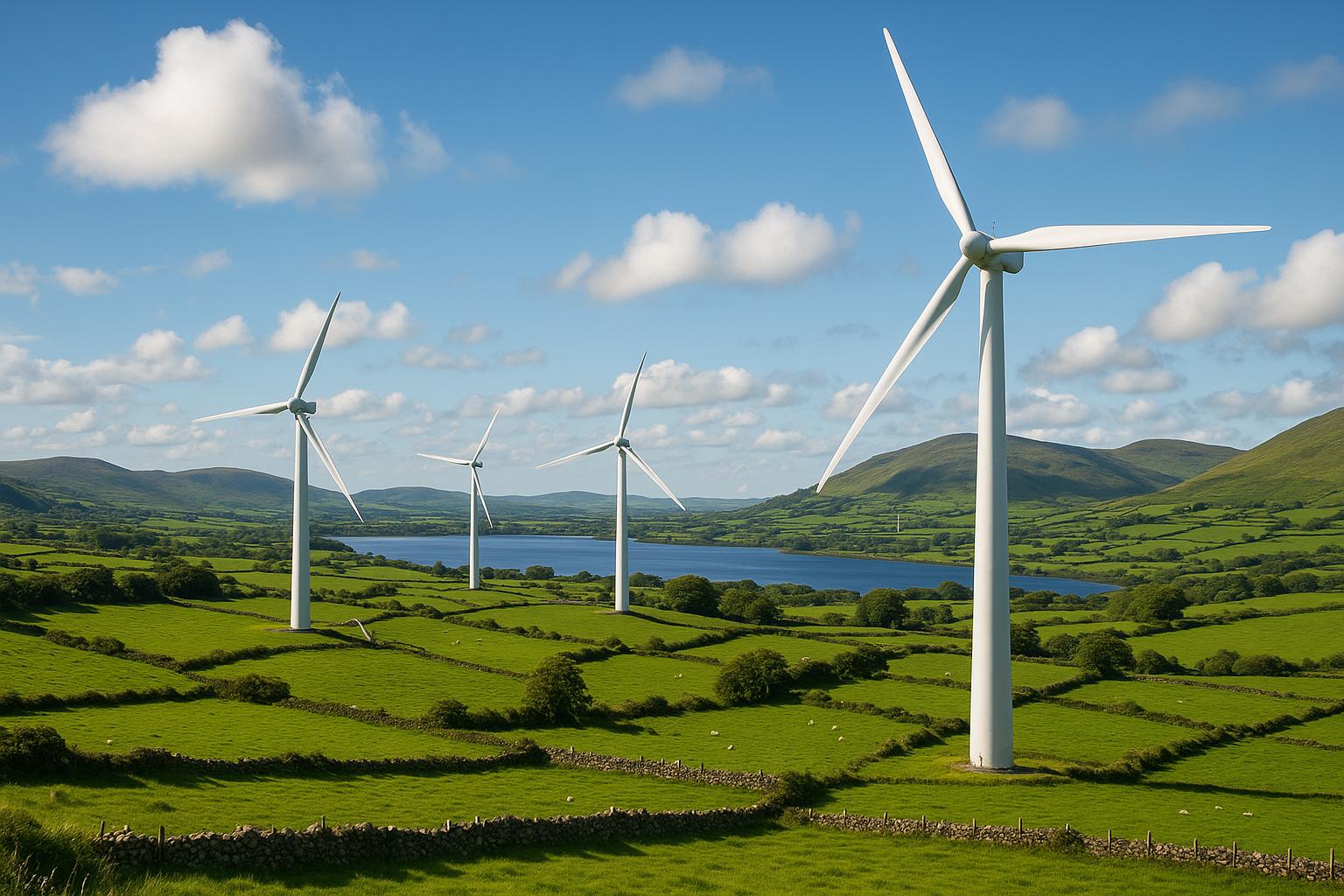
The report credits large reductions in emissions to the electricity generation sector, where the phasing out of peat and coal, reductions in gas-fired generation and a rapid expansion of renewables have delivered the biggest and fastest declines. Industry data shows that wind, solar and other renewables now supply about 41% of electricity, with solar production rising by 70% in the last year. The SEAI also notes a marked increase in net electricity imports from the UK , net imports accounted for 10% or more of gross electricity supply in 23 of the 24 months between October 2023 and September 2025, and in June 2025 nearly one quarter of utility-scale supply came from imports. [1][2][3]
Despite these gains in power generation, transport remains a stubborn emissions source. The SEAI reports transport is still 93% powered by fossil fuels and that greenhouse gas emissions from transport have fallen only 5.3% compared with 2018 , an average reduction of 0.9% per year, far below the pace needed. The agency says a significant shift from private car use to active travel and public transport, especially for shorter journeys, is essential. It points to recent infrastructure rollouts such as cycleways, Local Link services, BusConnects, DART+ and the Luas extension, and says further investment , including delivery of the long-awaited Metrolink , must continue. [1]
Heat pumps and home energy upgrades are highlighted as crucial levers for faster decarbonisation. SEAI data shows that heat pumps delivered more renewable energy last year than all solar farms and rooftop panels combined, while the National Retrofit Programme upgraded around 60,000 homes this year. The government has reported nearly 54,000 SEAI-supported home upgrades in 2024 and total investment of over €1.2 billion in upgrades since 2019, reflecting sustained momentum in building efficiency measures. The SEAI argues that scaling heat-pump deployment, accelerating retrofits and expanding district heating will be central to meeting 2030 targets. [1][4]
The report also flags the rapid rise in electricity demand driven by data centres. SEAI statistics show data centres were responsible for 88.2% of the increase in electricity used between 2015 and 2024 and now account for 21.2% of all electricity demand in Ireland , roughly seven times the EU average cited by the European Commission. Without data-centre growth, net electricity demand would have been roughly flat over the past nine years; with them it has risen around 27%. SEAI and other analyses caution that this persistent demand growth complicates efforts to decarbonise the whole energy system. [1][2]
The SEAI’s mid-year review published in October 2025 further warned that, while residential emissions are likely to remain within the first carbon budget allocation, the transport and electricity sectors were on course to exceed their allocations, underscoring the need for faster technology deployment and strategic policy action. According to the review, accelerating grid investment and offshore wind infrastructure are priorities if Ireland is to secure affordable, low-carbon energy for homes and businesses. [3]
SEAI Chief Executive William Walsh emphasised the connection between energy and wider policy goals, saying: “We’re making progress, and by accelerating delivery – in grid investment and offshore wind infrastructure in particular, we can do a lot more to secure affordable energy for homes and businesses across Ireland.” He also noted the role of home upgrades: “Our National Retrofit Programme upgraded around 60,000 homes this year, making them warmer and more comfortable to live in, while also helping with energy bills.” The SEAI framing stresses that moving away from fossil fuels will produce a more secure, healthier and more competitive economy and society, but that current policy and delivery rates must be intensified to meet statutory targets. [1]
Commentators and independent reporting have also pointed to the persistence of fossil-fuel reliance across broader energy supply: despite record generation from renewables in recent years, other analyses show more than 80% of Ireland’s total energy supply continued to come from fossil fuels in 2023, and renewables remain below the 2030 share targets. These assessments reinforce the SEAI’s conclusion that progress, while real, is insufficient without scaled action across transport, buildings, grid infrastructure and large electricity consumers. [5][7]
Meeting Ireland’s 2030 obligations will require sustained policy focus and faster delivery on multiple fronts: rapid expansion of wind and solar, strengthened grid and interconnection, accelerated heat-pump rollout and deep retrofit of homes, stronger public and active travel uptake, and managing the growth of high-demand electricity users. According to SEAI, without such acceleration the country risks falling short of its legally binding emission-reduction commitments despite significant recent gains. [1][2][3]
📌 Reference Map:
##Reference Map:
- [1] (RTE) – Paragraph 1, Paragraph 2, Paragraph 3, Paragraph 4, Paragraph 5, Paragraph 7, Paragraph 8, Paragraph 9
- [2] (SEAI Energy in Ireland) – Paragraph 1, Paragraph 2, Paragraph 5, Paragraph 9
- [3] (SEAI Mid-Year Review) – Paragraph 2, Paragraph 6, Paragraph 9
- [4] (Government press release) – Paragraph 4
- [5] (The Irish Times Dec 2024) – Paragraph 8
- [7] (The Irish Times Sep 2024) – Paragraph 8
Source: Fuse Wire Services