


Listen to the article
New research highlights a growing focus on sustainable, compliant, and high-performance infrastructure as data centres adapt to accelerating AI workloads and evolving regulatory landscapes, especially across the EMEA region.
Data centers, the backbone of modern digital infrastructure, are facing rapidly evolving demands driven by exponential data growth, the surge of artificial intelligence (AI), and stringent regulatory pressures. New research commissioned by Lenovo sheds light on the challenges and priorities shaping the future design and operation of these critical facilities, particularly within the EMEA region.
According to Lenovo’s Data Center of the Future study, nearly half of IT leaders admit their current data centers fall short of their energy efficiency and carbon-reduction goals, revealing a significant sustainability readiness gap. Most IT decision-makers now prioritise technology partners who provide carbon offset services and energy-efficient innovations, yet less than half feel their current infrastructure aligns with these sustainability ambitions. This gap is exacerbated by AI’s increasing data demands, which propel energy consumption upward, while traditional cooling methods such as air cooling struggle to deliver the efficiency and carbon reductions that modern workloads require. Lenovo’s research underscores that future data centers must balance performance scaling, especially to support AI, with sustainability and compliance requirements.
In line with these findings, industry-wide data reflect a similar tension. Morgan Stanley projects the data center industry’s CO2-equivalent emissions will reach about 2.5 billion metric tons globally by 2030, driven by hyperscalers like Google, Microsoft, Meta, and Amazon expanding their infrastructure to meet AI and cloud computing needs. These major players are investing heavily in decarbonization strategies, including clean energy sourcing, energy-efficient technologies, and innovative carbon capture solutions, aiming to mitigate their environmental footprint amid rapid growth.
Sovereignty and data compliance are also emerging as critical factors that will shape future data centres. Lenovo’s study reveals that almost all IT decision-makers consider data sovereignty essential, with close to 99% expecting this priority to persist over the next five years. This is echoed by recent initiatives such as Amazon Web Services’ launch of the AWS European Sovereign Cloud, designed to meet the European Union’s stringent data privacy and residency rules by operating entirely within the EU with full local control over data. Enhanced regional regulations and concerns over data transfer transparency have led cloud providers to devise infrastructure that balances low latency performance demands with compliance, a challenge set to influence data center locations and architectures significantly.
Addressing the urgent sustainability challenges, leading companies are taking varied approaches. Microsoft, for instance, heavily invests in renewable energy, seeking to power its US data centers with expanded wind and solar resources to meet rising AI-driven power consumption, while committing to becoming carbon negative by 2030. Contrastingly, Google recently downplayed its net-zero carbon target in public-facing materials amid rapid AI-related infrastructure expansion and rising emissions, highlighting the practical difficulties of harmonising ambitious climate goals with escalating energy demands. Such developments illustrate the tension between operational imperatives and environmental commitments facing data center operators today.
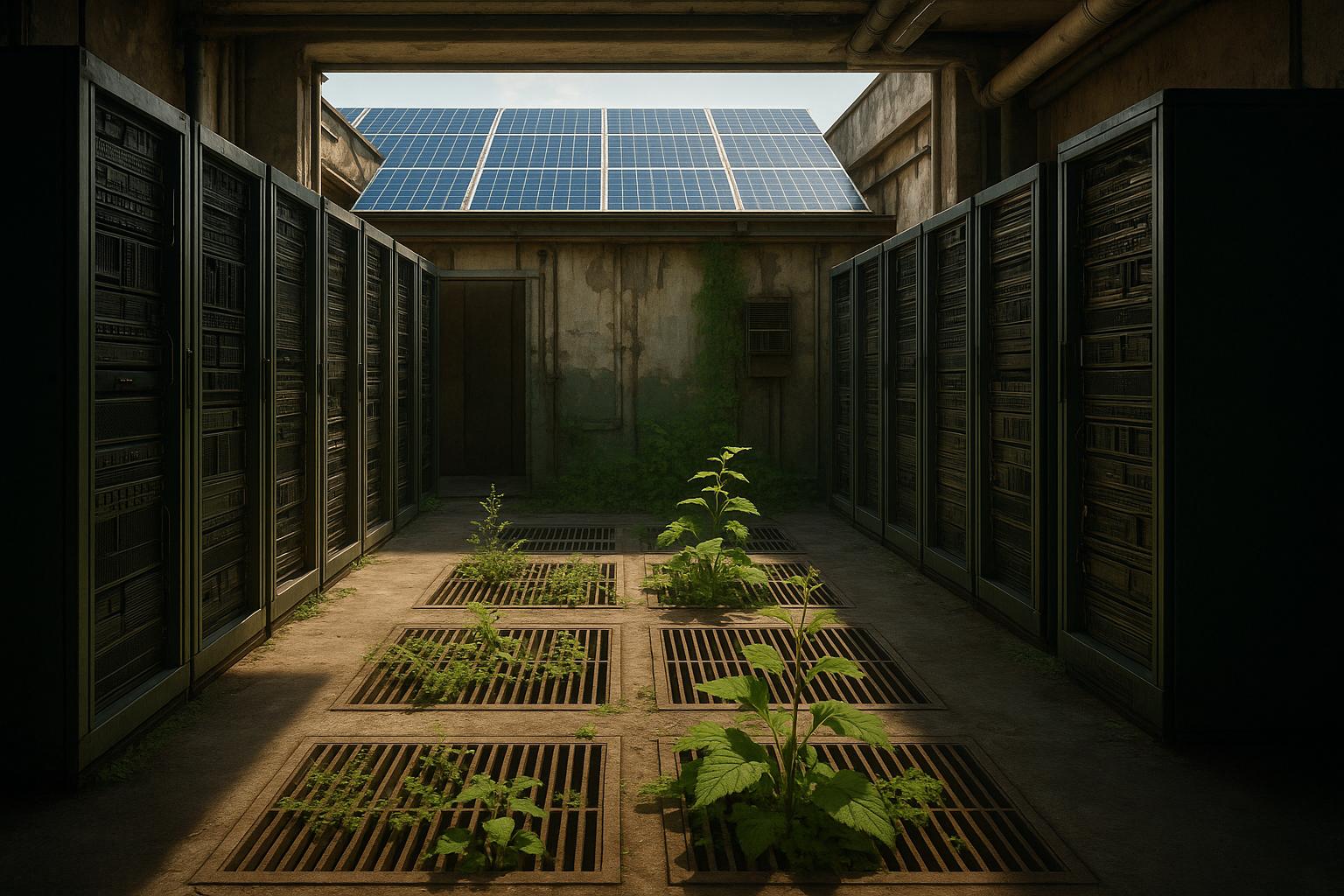
Iron Mountain and EcoDataCenter exemplify firms pushing the envelope on sustainability through measurable reductions in carbon intensity and fossil fuel dependence, with landmark achievements in zero-carbon power sourcing and ambitious targets to minimize environmental impact. Innovations in cooling technology also play a key role. Lenovo’s collaboration with engineering and architectural experts envisions future data centers leveraging advanced water cooling combined with repurposing disused underground spaces and integrating data centers into urban environments, transforming them into multifunctional hubs that blend sustainability with efficiency.
As data centers evolve over the next decades, the integration of scalable AI capabilities, rigorous sustainability standards, and data sovereignty imperatives will define their architecture and operation. The future data center will likely embody a convergence of high-performance infrastructure, responsible environmental stewardship, and compliance with an increasingly complex regulatory landscape. Businesses that proactively align with these imperatives today will be better positioned to meet the challenges and opportunities of tomorrow’s digital economy.
📌 Reference Map:
- [1] (Lenovo News) – Paragraphs 1, 2, 3, 7, 8
- [2] (Reuters) – Paragraphs 2, 5
- [3] (AP News) – Paragraph 4
- [4] (Reuters) – Paragraph 5
- [5] (Tom’s Hardware) – Paragraph 6
- [6] (Iron Mountain) – Paragraph 7
- [7] (EcoDataCenter) – Paragraph 7
Source: Fuse Wire Services