


Listen to the article
Airtel Africa’s collaboration with Starlink to provide Direct to Cell services could redefine mobile connectivity in the continent, focusing on bridging coverage gaps with satellite technology while navigating complex regulatory landscapes.
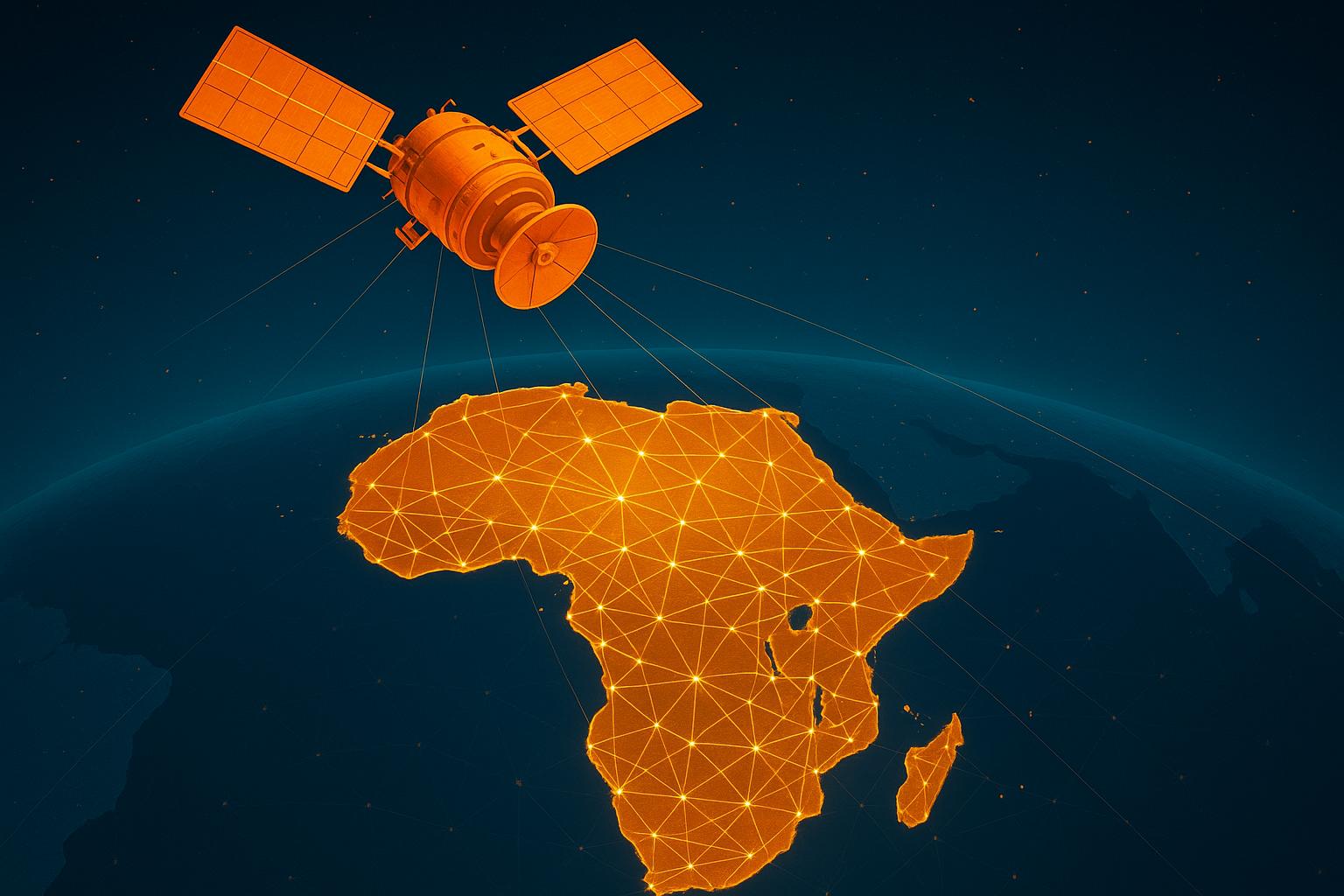
When Airtel Africa confirmed it would carry Starlink’s Direct to Cell service across its footprint next year, the announcement sounded straightforward: phones connect to satellites, texts go through, coverage expands. The reality, as the company and industry observers acknowledge, is messier and more consequential. The partnership layers a thin orbital fabric above existing mobile networks, designed to plug structural coverage gaps that terrestrial infrastructure has failed to reach. [1][6]
At launch the service will focus on SMS and limited text-based messaging rather than voice or broad mobile data. Airtel framed the offering around presence rather than performance, positioning Direct to Cell as connective tissue for its existing network rather than a replacement for towers or a standalone broadband product. According to Reuters, the deal will also support Starlink’s next-generation system promising materially faster data in later phases, but the first phase prioritises reliability for low-bandwidth services. [1][2][6]
For Airtel the attraction is practical. Satellite links sidestep many of the real-world obstacles that make tower deployment costly or impossible in parts of Africa , unreliable power, right-of-way disputes, vandalism, difficult terrain and very low average revenue per user. Customers keep their handsets and SIMs; billing and numbering remain with the operator. The company can therefore extend coverage without the capital intensity and operational risk of building out towers in every hard-to-reach locality. Industry analysis characterises the move as a way to achieve coverage parity without symmetrical investment. [1][6][4]
Regulation is likely to determine how fast and how widely the service rolls out. Airtel’s announcement explicitly tied availability to local approval, and that caveat is material. Satellite-to-phone services raise complex issues around spectrum coordination, lawful intercept, emergency services integration and data routing across jurisdictions. Regulators in Airtel’s 14 markets will approach those issues differently, creating the prospect of a staggered and uneven rollout. Reports note that SpaceX already holds licences for fixed Starlink broadband in nine Airtel markets, while five remain in application. [1][6][7]
SpaceX’s commercial approach helps smooth some regulatory paths. Rather than entering markets alone, Starlink has repeatedly partnered with incumbent operators , a pattern seen in the United States, New Zealand, Ukraine and in recent deals with Veon and Vodacom , which gives national regulators familiar corporate counterparts to negotiate with. Reuters and other industry reports describe Airtel as a template partner: large scale, local footprint and institutional memory that can absorb integration work such as numbering and emergency protocol alignment. [2][5][4]
But Africa also amplifies sensitivities less prominent in wealthier markets. Pricing expectations, network reliability and national security concerns carry different weight across the continent. Governments may impose conditions, demand oversight or seek infrastructure investment commitments in return for approvals. Recent policy shifts in countries such as South Africa, which has eased certain local ownership rules in communications to allow “equity equivalent” investments to satisfy empowerment objectives, indicate regulators are experimenting with new frameworks to accommodate foreign satellite operators while protecting national policy goals. That changing regulatory landscape could both speed and complicate negotiations. [3][1]
Technically, starting with SMS is sensible. Short messages remain a backbone service across Africa: they underpin mobile money notifications, two-factor authentication, emergency alerts and basic coordination where data remains costly or unreliable. Direct to Cell’s initial constraints , spectrum, power and handset compatibility , make low-bandwidth services the least risky first step. Operators and SpaceX are treating this as infrastructure sequencing rather than a consumer gadget launch, with broader voice and data features slated for later phases if regulators and networks permit. [1][2][6]
The deal reshapes competitive dynamics in subtler ways than some early satellite internet forecasts predicted. Rather than displacing mobile operators, satellite layers create advantage for operators that integrate them. Rivals that rely solely on terrestrial networks risk exposure in rural or remote areas, even if urban services remain strong. Meanwhile, the proliferation of low Earth orbit constellations means early partnerships set habits with regulators and operators; once systems are embedded into numbering plans and emergency services, switching costs and lock‑in can increase. Reuters reporting on other Starlink tie-ups highlights this widening race among operators and satellite providers. [1][5]
There are clear upside scenarios and equally clear risks. If approvals progress smoothly and technical integration proves reliable, Direct to Cell could become an invisible but pervasive feature of mobile connectivity in parts of Africa within a few years. Users may never notice whether a message travelled by fibre and tower or by a satellite beam. Conversely, regulatory delays, divergent national conditions, onerous compliance demands or mismatched public expectations could fragment the rollout and blunt commercial returns. Market observers and company statements suggest both outcomes are plausible. [1][2][6]
Airtel’s agreement with SpaceX acknowledges a shifting reality: connectivity is no longer only what can be built on the ground. The initial focus on texts reflects both technical limits and practical need, while the partnership model mirrors Starlink’s broader strategy of working with incumbents. Whether texts from orbit become a routine, quietly effective part of African mobile life will depend as much on national policy choices and regulatory timetables as on satellites and handsets. [1][2][3]
📌 Reference Map:
##Reference Map:
- [1] (TechTrendsKE) – Paragraph 1, Paragraph 2, Paragraph 3, Paragraph 4, Paragraph 7, Paragraph 9, Paragraph 10
- [6] (DevelopingTelecoms) – Paragraph 1, Paragraph 2, Paragraph 4, Paragraph 7, Paragraph 9
- [2] (Reuters) – Paragraph 2, Paragraph 5, Paragraph 8, Paragraph 9
- [5] (Reuters) – Paragraph 5, Paragraph 8
- [4] (Reuters) – Paragraph 3, Paragraph 5
- [3] (Reuters) – Paragraph 6
- [7] (Business Standard) – Paragraph 4
Source: Fuse Wire Services