


Listen to the article
Ruth Porat of Alphabet highlights growing industry concerns over the US’s ability to meet the energy demands of the rapidly expanding artificial intelligence sector, prompting innovative and large-scale solutions to ensure reliable power supply.
Ruth Porat, president and chief investment officer of Alphabet, warned on the sidelines of the CERAWeek energy conference in Houston that the United States risks falling short in building the power capacity demanded by the rapid expansion of artificial intelligence. “We are concerned that we are not full throttle on energy,” she said, urging a broad approach to energy development to support AI data-centre growth.
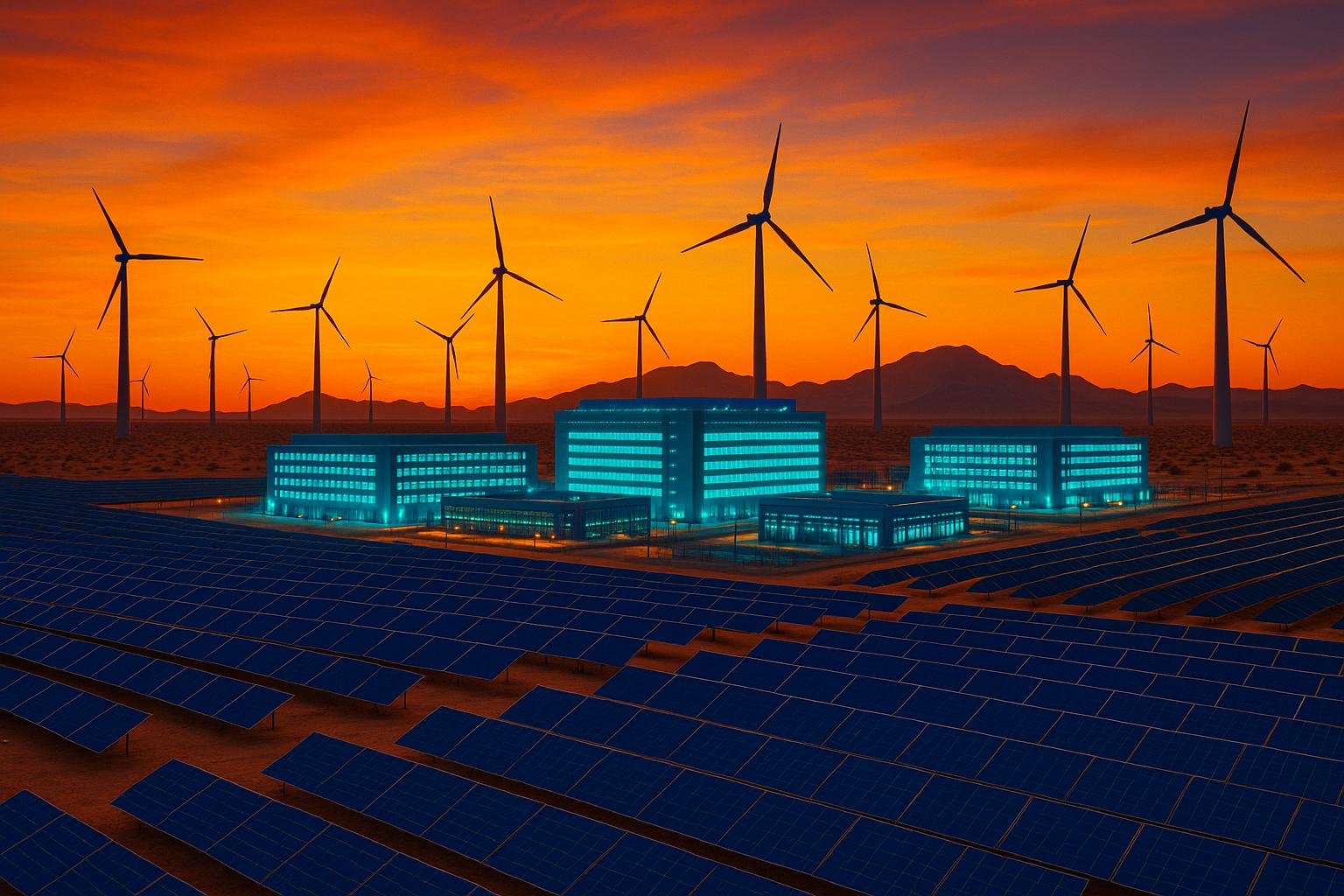
Porat’s comments underscore a mounting industry anxiety: hyperscale data centres that train and serve AI models consume vast amounts of electricity and are being developed at an unprecedented rate across the United States. Big technology companies are investing heavily in new facilities and in the energy needed to run them, but projects frequently face delays connecting to local grids and shortages of key equipment such as large gas turbines, complicating timely expansion.
Some companies are pursuing a suite of responses. Alphabet has taken the unusual step of acquiring a power company to secure supply, is investing in advanced nuclear concepts, and has negotiated arrangements with utilities to reduce demand during peak periods. The firm has also struck deals with electricity providers to revive existing generation capacity for its needs, including contracting with NextEra Energy to restart a closed nuclear plant to serve its data centres.
Industry efforts to make AI loads more grid-friendly are emerging alongside new supply projects. According to a report of industry discussions hosted ahead of CERAWeek, Nvidia and startup Emerald AI are working with major utilities such as AES, Constellation, NextEra Energy, Invenergy and Vistra to design “flexible” AI data centres that can vary consumption in response to grid conditions and participate in demand response programmes rather than run at constant full power.
At the same time federal and private investment is being marshalled to build very large-scale capacity. A planned 10-gigawatt AI campus in Piketon, Ohio, backed by public–private initiatives and international financing, will include substantial natural gas generation to ensure reliability for a proposed hyperscale deployment. The U.S. Department of Energy has framed such projects as part of broader efforts to bolster both AI competitiveness and regional energy resilience.
Energy analysts and public-interest research highlight trade-offs. Google’s recent 20-year agreement in Michigan to underwrite several gigawatts of new solar and battery storage demonstrates one corporate route to pair data-centre build‑out with large-scale clean resources, while independent studies point to the potential for rising electricity use, local grid stress and public concern unless growth is matched by careful planning, diversified generation and greater grid flexibility.
Source Reference Map
Inspired by headline at: [1]
Sources by paragraph:
Source: Fuse Wire Services