


Listen to the article
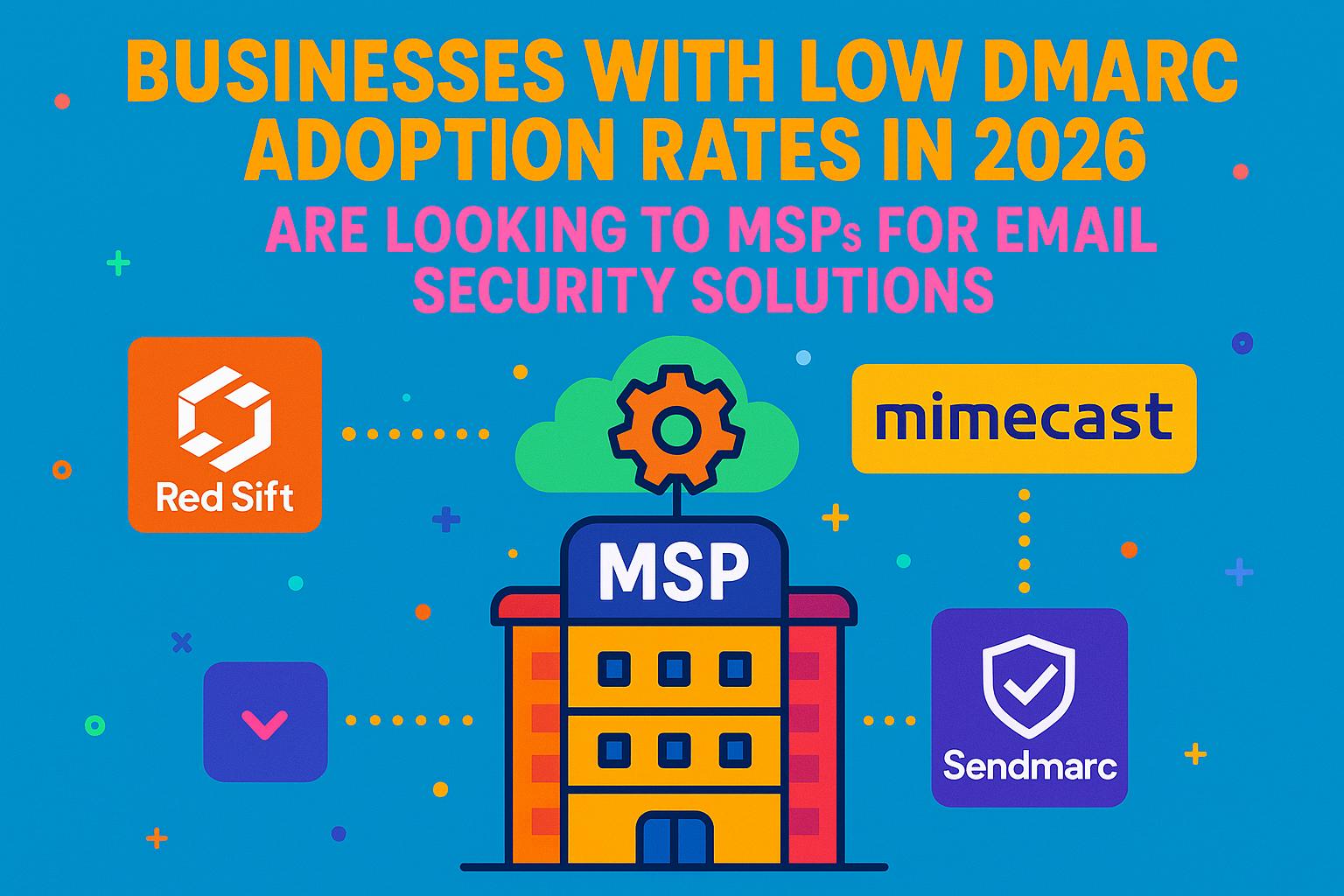
Despite the critical role of DMARC in preventing cyber intrusions, its low adoption rate presents a strategic opening for MSPs. Recent market comparisons highlight emerging vendors like Red Sift, Mimecast, and Sendmarc, whose specialised platforms offer automation, scalability, and wider security integrations that could redefine managed email security services in 2026.
Over three quarters of targeted cyber intrusions begin with a deceptive email, yet adoption of enforceable DMARC remains low across the internet, creating a significant commercial opening for managed service providers prepared to deliver authenticated email as a repeatable service. A recent TechBullion comparison lays out the principal vendor choices for MSPs and MSSPs in 2026 and frames the decision around multi-tenancy, implementation speed, protocol breadth and partner economics. According to practitioner reviews and market comparisons, choosing the right platform changes whether DMARC becomes a high-margin recurring line or an operational burden. (Gartner reviews; G2 comparisons).
Red Sift’s OnDMARC emerges in user feedback as the vendor most explicitly architected for MSP scale, combining an API-first design with dynamic SPF resolution that reduces manual DNS churn and accelerates moves to p=reject. Independent user reviews credit the product with shortening time-to-enforcement and delivering clear, actionable reporting that non-specialist technicians can follow, while the vendor’s hosted MTA-STS, TLS-RPT and integrated BIMI/VMC workflow stand out as add-ons MSPs can monetise. The trade-off is higher sticker price versus bare‑bones monitoring tools, though partners say automation frequently recoups the investment. (Gartner reviews; G2 comparison; Red Sift technical post).
Mimecast’s DMARC capability sits inside a broader email security suite and is most attractive to MSPs already selling Mimecast services. The vendor’s Partner ONE programme, introduced in late 2024, packages partner enablement, API automation and certification pathways that simplify integration with existing managed offerings, but reviewers note the DMARC module lacks the single‑purpose depth and multi‑tenant finesse of specialist platforms. For practices seeking an upsell into security awareness, continuity and inbound filtering under a single commercial arrangement, Mimecast represents a pragmatic bundle rather than a DMARC-first play. (TechBullion; G2 comparison).
Proofpoint’s Email Fraud Defense is positioned as an enterprise-grade, consultant-driven solution that pairs authentication services with supplier risk and inbound fraud analytics. Its strengths are the enterprise assurances and dedicated rollout support that large regulated customers demand; its limitation for MSPs is operational model mismatch. The product is not optimised for white-labelled, multi‑tenant service delivery at SMB scale, meaning MSPs with many smaller clients will find the consultant-led approach costly to replicate repeatedly. (TechBullion; product comparisons).
Sendmarc presents itself as a partner-centric platform with native PSA integration, including a certified ConnectWise connector, co‑branded reporting and guided implementations that map neatly onto typical MSP workflows. The vendor’s automated SPF handling and lookalike‑domain monitoring extend utility beyond basic DMARC reporting, though reviewers suggest its AI tooling and DNS‑protection breadth lag behind the most automation‑heavy competitors. For MSPs whose operational spine is ConnectWise and who want a repeatable, white‑label service path, Sendmarc is a strong contender. (TechBullion; Sendmarc vs Proofpoint comparison).
dmarcian appeals to MSPs that prioritise clarity and education in deployments. Its reporting translates aggregate telemetry into named sending sources and provides structured steps for moving clients from monitoring to enforcement; its pricing model, based on sending volume, can suit portfolios with modest mail flow. However, dmarcian lacks extensive white‑labelling, AI analysis and deeper DNS/brand‑protection modules present in newer platforms, so MSPs seeking an automated, full‑stack product will find it more of a learning-first choice. (TechBullion; dmarcian comparisons).
Beyond feature lists, MSP selection boils down to four operational tests: can the vendor manage many client tenants from one console with strict data separation; does it publish realistic time‑to‑enforcement metrics; does it cover the wider protocol set (BIMI, MTA‑STS, TLS‑RPT) that unlocks visible client value; and do partner economics improve with scale and include white‑labeling or co‑branding. MSPs that cannot answer those questions affirmatively should expect heavy manual overhead or compressed margins. (TechBullion analysis; industry comparisons).
Service differentiation requires looking past DMARC alone. Modern attackers exploit DNS misconfiguration, dangling subdomains and lookalike registrations, issues DMARC does not address. Platforms that combine authentication management with DNS hygiene, lookalike domain detection and breach surveillance give MSPs upsell routes and stronger client retention, turning DMARC from a compliance checkbox into a layered managed security capability that supports higher ARPU. Market reviews indicate those extended features are increasingly the deciding factor for MSPs seeking long‑term profitability. (TechBullion; Red Sift technical post; product comparisons).
For MSPs choosing a partner in 2026, the practical advice from vendor evaluations and user reviews is clear: match the platform to your go‑to‑market and operational model. If you need rapid, highly automated enforcement and DNS/brand protection at scale, a specialist automation‑first platform is likely to deliver the best unit economics. If you are bundled inside an incumbent email security ecosystem, a broad suite with partner enablement may simplify sales and provisioning. If your priority is building internal DMARC expertise and controlled cost exposure, an education‑centred provider remains a sensible on‑ramp. Each path has demonstrable trade‑offs; the right vendor is the one whose technical architecture, partner programme and commercial terms align with how you deliver managed services. (TechBullion; Gartner reviews; Suped and G2 comparisons).
Source Reference Map
Inspired by headline at: [1]
Sources by paragraph:
- Paragraph 1: [1], [2]
- Paragraph 2: [2], [3], [4]
- Paragraph 3: [1], [3]
- Paragraph 4: [1], [5], [7]
- Paragraph 5: [1], [5]
- Paragraph 6: [1], [7]
- Paragraph 7: [1], [4]
- Paragraph 8: [1], [4], [5]
- Paragraph 9: [1], [2], [3]
Source: Noah Wire Services